






















Biography and Memoir
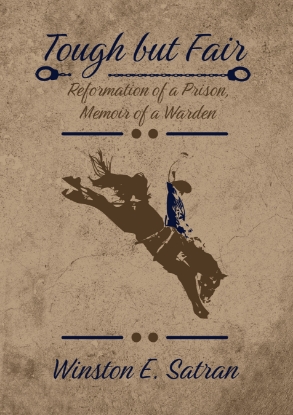
Tough but Fair
“Tough but Fair originated from my twenty-eight years of experience working with troubled juveniles and convicted felons. On December 1, 1972, I was appointed Deputy Warden of the North Dakota State Penitentiary. The prison was on the verge of being out of control daily…inadequately funded and staffed by untrained, aging correctional officers; uneducated managerial staff; and one qualified social worker. The combination of these factors led to assaults on staff, improper discipline, a rapid decline in the facility structure, and extreme disrepair of the utilities and services. A new warden was appointed, and he began to organize a plan to regain control of the inmate population, institute programs that would divert the inmates away from criminal behavior within the prison, and build respect for the staff. These challenges led me on a journey that was intellectually, physically, and spiritually transformative. It was the greatest challenge of my life.” - Winston E. Satran

Song for Liv, A
“A Song for Liv by Wayne Gudmundson is a love letter to his daughter, Liv. Serendipitously, the modern Nordic name Liv also means ‘life.’ As well as a gift to his daughter, A Song for Liv, is a personal meditation on place, the search for personal and ethnic identity, and the complexities therein, much of which is located in the mists (and myths) of time with only the ancient landscapes of those stories remaining. Combining travel notes, Icelandic history and lore, and family relationships, Gudmundson’s form here—best characterized as hybrid—weaves a tapestry that is at once inviting and accessible, each page entry a stanza-like lyric of the larger song."
—Thom Tammaro, three-time Minnesota Book Award recipient and author of When the Italians Came to My Home Town and Italian Days & Hours
“Written as a gift from a father to his daughter, A Song for Liv gathers up what wisdom and understanding a father can offer. His story begins its search for ancestral places in the Faroe Islands, where Gudmundson explores his investment in the larger Scandinavian world, having claimed a portion of the Faroes as his own. The narrative of the Norse invasion of Scandinavia continues on through Iceland to Canada to the settlement of Gimli, Manitoba, and from there to a small church in North Dakota, the home of Gudmundson’s grandparents and the protean poet K.N., whose spirit hovers over the entire narrative.”
—David Arnason, writer, professor, and Viking from Gimli, Manitoba
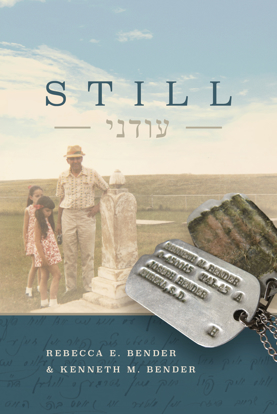
Still
More than four hundred Russian and Romanian Jewish homesteaders settled on about eighty-five farms in McIntosh County, North Dakota, beginning in 1905. After clearing rocks and boulders, growing wheat and flax, raising cattle and chickens, and selling cream from their sod houses, most were successful enough to own their own land.
Still is a history of five generations, a family we meet first as they flee Odessa and last as they make their ways as American Jews . . . and as Dakota farmers, as students and storekeepers, as soldiers and lawyers, and even as a teen in an international competition who stands face-to-face with Netanyahu. Rebecca Bender and Kenneth Bender answer the question recently posed to Rebecca by a newspaper reporter: Are you still Jewish?
Paperback, 370 pp
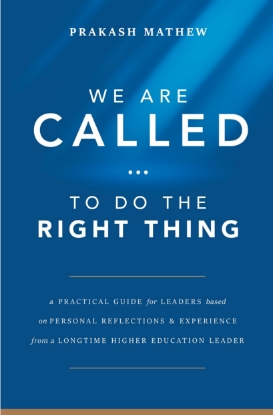
We Are Called...To Do the Right Thing: A Practical Guide for Leaders Based on Personal Reflections & Experience from a Longtime Higher Education Leader
We Are Called . . . To Do the Right Thing: A Practical Guide for Leaders Based on Personal Reflections & Experience from a Longtime Higher Education Leader
Prakash Mathew’s debut guide on leadership offers a compelling invitation to principled leadership with prudent and practical habits, gleaned from his almost four decades of student affairs work in higher education. We Are Called illustrates lessons in leadership with stories from a life well lived. Expounding on his 80/20 Principle, Prakash provides a plan for doing the right things for the right reasons.
We Are Called is of interest to leaders in higher education institutions (public and private), business leaders and organizations, religious organizations, start-up companies, search firms, and any organization seeking a change process, and as a training resource for boards, councils, and commissions.
Paperback, 120 pp., photos, index
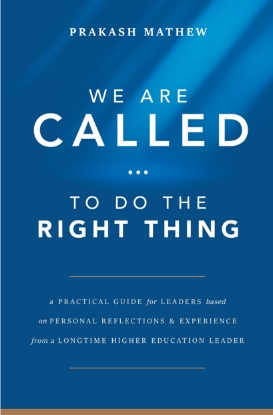
We Are Called...To Do the Right Thing: A Practical Guide for Leaders Based on Personal Reflections & Experience from a Longtime Higher Education Leader
We Are Called . . . To Do the Right Thing: A Practical Guide for Leaders Based on Personal Reflections & Experience from a Longtime Higher Education Leader
Prakash Mathew’s debut guide on leadership offers a compelling invitation to principled leadership with prudent and practical habits, gleaned from his almost four decades of student affairs work in higher education. We Are Called illustrates lessons in leadership with stories from a life well lived. Expounding on his 80/20 Principle, Prakash provides a plan for doing the right things for the right reasons.
We Are Called is of interest to leaders in higher education institutions (public and private), business leaders and organizations, religious organizations, start-up companies, search firms, and any organization seeking a change process, and as a training resource for boards, councils, and commissions.
Hardcover, 120 pp., photos, index
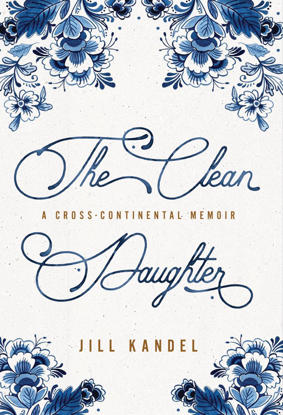
Clean Daughter: A Cross-Continental Memoir, The
Any marriage is complicated, but one where two people grow up speaking different languages and abiding by different cultural codes presents unique challenges. Insert a demanding father-in-law, a healthy man who inexplicably ends his life by means of legalized euthanasia.
When Jill Kandel married Johan, a man from the Netherlands, she never imagined the influence her father-in-law, Izaak, would hold over her life. Beneath his calm demeanor and clerical garb, Izaak carried the wounds of growing up in the Nazi-occupied Netherlands. Childhood chaos led him to become a man who had all the answers. For everyone. Except himself.
Izaak ended his own life—while still a healthy man—using legalized euthanasia in the Netherlands. The long tumultuous relationship between daughter-in-law and father-in-law was over. But Kandel couldn’t move on. Ten years later, still exhausted by thoughts of Izaak, she returned to the Netherlands to search for understanding.
The Clean Daughter is a story about building family across cultural, linguistic, and geographical divides. The complicated ways families both destroy and heal one another underpin Kandel’s story of a family held together by tenacity, curiosity, and courage.
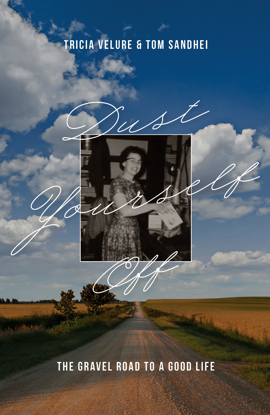
Dust Yourself Off: The Gravel Road to a Good Life
Dust Yourself Off: The Gravel Road to a Good Life is the true story of a farm woman in 1940s/50s North Dakota who recovered from a series of shocks and tragedies – and the surprising ways in which she did that. “This project began because I wanted my kids and grandkids to know their grandmother,” said the book’s co-author Tom Sandhei of his mother, Muriel. “She was a remarkable woman.” After Sandhei took the story as far as he could on his own, he teamed up with Tricia Velure, a personal historian and writer from the neighboring town. “Tom and I unknowingly grew up on farms less than 20 minutes from each other in North Dakota, 30 years apart,” said Velure. “Decades later, we met in the Twin Cities, where we lived 10 minutes apart. We were meant to meet and write this story together!”
Dust Yourself Off chronicles Muriel’s life in Fort Ransom, North Dakota, known as “Little Norway” for its forested hillsides above the Sheyenne River Valley and predominantly Norwegian settlers. Readers follow Muriel and her family through farm life during the settlement period, World War I, Great Depression, World War II, and the 1950s. While the co-authors describe Muriel as a quintessential Norwegian American farm girl in North Dakota, she was forced to leave home at age 19. Death and tragedy visited her regularly in her 20s and 30s, when time and again she challenged the traditional norms of what it meant to be a farm woman in her day. Muriel’s quiet yet bold courage helped create this touching family story, rich in historical details and local color.
Velure never met Muriel, who died at age 82 in 2004, but she calls Muriel a “bonus grandmother” and believes readers will feel the same affinity. “This book will appeal to readers who enjoy farm and small-town stories, Norwegian American history, and inspiring stories of everyday women. If you wish you knew your grandparents’ life story, this is a book for you.”
About the Authors
Tricia Velure is a personal historian who helps elders share their life stories with their families. She grew up on her family’s cattle and small grains farm near Kathryn, North Dakota, and earned degrees in English and history from Valley City State University and a master’s degree in history from North Dakota State University.
Tom Sandhei is a retired school administrator who grew up on his parents’ and grandparents’ farms near Fort Ransom, North Dakota. He graduated from Valley City State College, began teaching, then earned a master’s degree in elementary school administration from North Dakota State University. His career in education spanned almost 40 years. Velure and Sandhei have lived in suburban Minneapolis/St. Paul since the 1990s.